
- Your cart is empty Browse Shop
Commercial Solar Power Systems: Benefits for Businesses and Industries

March 11,2026
0
66
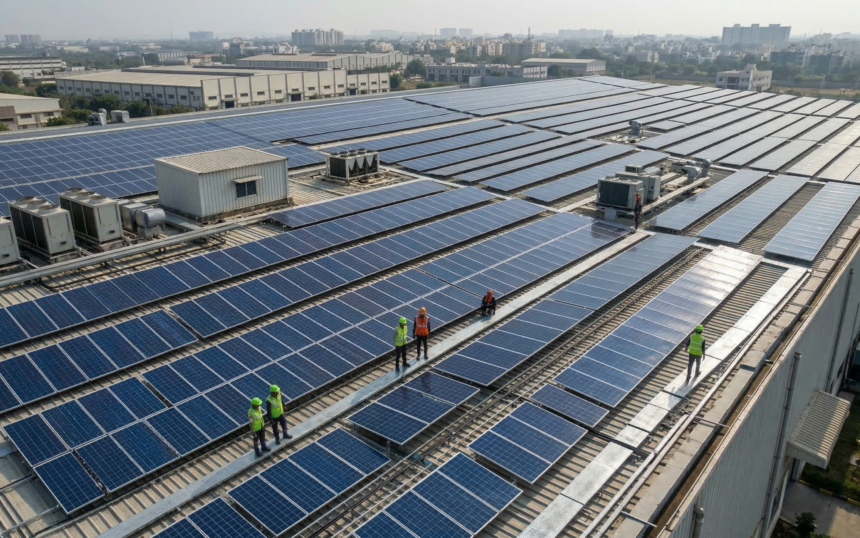
The demand for renewable energy solutions is growing rapidly across commercial and industrial sectors in India. Businesses are increasingly adopting solar power systems to reduce operational costs, stabilize electricity expenses, and achieve sustainability goals. Commercial solar installations provide a reliable way for organizations to generate their own electricity while reducing dependence on grid power.
With rising electricity tariffs and increasing energy demand, commercial solar systems are becoming a strategic investment for factories, offices, warehouses, hospitals, and educational institutions. Solar energy not only offers long-term financial savings but also strengthens a company’s environmental responsibility.
What Is a Commercial Solar Power System
A commercial solar power system is designed to generate electricity for businesses and industrial facilities. These systems are typically larger than residential solar installations and can be installed on rooftops, parking structures, or open land near industrial premises.
The electricity generated by solar panels can power equipment, lighting, HVAC systems, and other operational needs within a facility.
Key components of a commercial solar system include:
- High-efficiency solar panels
- Industrial-grade inverters
- Mounting structures
- Electrical distribution system
- Monitoring and control systems
Commercial systems are engineered to handle higher energy loads and operate efficiently for many years.
Why Businesses Are Investing in Solar Energy
Companies today are focusing on reducing operational expenses while maintaining sustainable business practices. Solar power helps businesses achieve both objectives.
Major reasons businesses adopt solar energy include:
- Significant reduction in electricity bills
- Protection from rising energy tariffs
- Improved corporate sustainability goals
- Long-term return on investment
- Reduced carbon footprint
Commercial solar systems can help organizations reduce electricity expenses by a large percentage depending on system size and energy consumption.
Types of Commercial Solar Installations
Businesses can choose different types of solar installations based on available space and energy requirements.
| Installation Type | Description | Suitable For |
|---|---|---|
| Rooftop Solar | Panels installed on factory or office roofs | Industries and commercial buildings |
| Ground-Mounted Solar | Solar panels installed on open land | Large factories or warehouses |
| Solar Carport | Panels installed above parking areas | Commercial complexes |
Rooftop installations are the most common for commercial buildings, while large industries may opt for ground-mounted systems if land is available.
Energy Cost Savings for Businesses
Electricity is one of the largest operational expenses for many businesses. Solar power systems allow companies to produce their own electricity during daytime operations.
Key financial benefits include:
- Lower monthly electricity bills
- Reduced demand charges
- Long-term protection from tariff increases
- Faster return on investment
Many commercial systems achieve payback within 4 to 6 years, after which electricity generation provides long-term savings.
Solar EPC Projects for Commercial Installations
Commercial solar projects are typically executed through an EPC model, which stands for Engineering, Procurement, and Construction.
An EPC provider manages the entire solar project from design to installation.
EPC services typically include:
- Solar feasibility analysis
- System engineering and design
- Equipment procurement
- Professional installation
- Testing and commissioning
Working with an experienced EPC provider ensures high-quality installation and optimal system performance.
Solar System Capacity for Commercial Buildings
The size of a commercial solar system depends on the building’s electricity demand and available installation space.
| System Size | Approximate Usage |
|---|---|
| 10 kW – 30 kW | Small offices and retail stores |
| 30 kW – 100 kW | Medium commercial buildings |
| 100 kW – 500 kW | Factories and warehouses |
| 500 kW and above | Large industrial facilities |
Proper system design ensures the solar installation meets the energy needs of the business.
Environmental Impact of Commercial Solar
Solar power significantly reduces the environmental impact of commercial operations.
Environmental benefits include:
- Lower greenhouse gas emissions
- Reduced reliance on fossil fuels
- Cleaner energy production
- Contribution to sustainability initiatives
Companies adopting solar energy also improve their corporate image by demonstrating environmental responsibility.
Monitoring and Performance Optimization
Modern commercial solar systems include advanced monitoring tools that track energy production and system performance.
These monitoring systems allow businesses to evaluate electricity generation in real time.
Monitoring systems help with:
- Performance tracking
- Fault detection
- Energy consumption analysis
- Maintenance planning
Real-time monitoring ensures the solar system operates at peak efficiency.
Maintenance Requirements
Solar power systems require minimal maintenance but periodic inspections help maintain system performance.
Typical maintenance activities include:
- Cleaning solar panels
- Inspecting mounting structures
- Checking electrical connections
- Monitoring inverter performance
Regular maintenance ensures optimal electricity generation and extends system lifespan.
Future of Commercial Solar in India
India is moving toward large-scale adoption of renewable energy. Government policies and sustainability initiatives are encouraging industries to adopt solar power solutions.
Commercial solar installations are expected to grow significantly in the coming years as businesses seek cost-effective and environmentally friendly energy alternatives.
Companies that invest in solar energy today gain a competitive advantage through reduced operating costs and improved sustainability credentials.
Conclusion
Commercial solar power systems offer businesses a reliable and cost-effective solution for meeting their energy needs. By generating clean electricity, companies can reduce operating expenses, improve sustainability efforts, and achieve long-term energy security.
As solar technology continues to evolve, commercial solar installations will play a major role in powering industries and supporting the transition toward renewable energy.
Businesses that adopt solar energy today position themselves for a more sustainable and financially stable future.